You use parts of speech every single time you speak or write. Yet most people can’t name it all without a quick refresher.
If English feels slippery when you try to explain why a sentence works, learning the parts of speech is the fix. They’re the building blocks that turn scattered words into clear ideas.
This guide walks you through the 8 parts of speech with definitions and examples that stick. No dry textbook energy, just plain explanations you can actually use.
By the end, you’ll spot nouns, verbs, and everything in between without second-guessing. You’ll also pick up small habits that sharpen your writing right away.
Ready to make grammar feel simple? Let’s break it down.
Key Takeaways
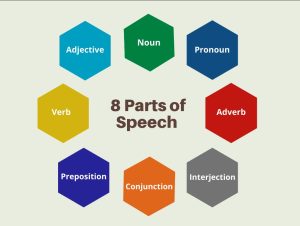
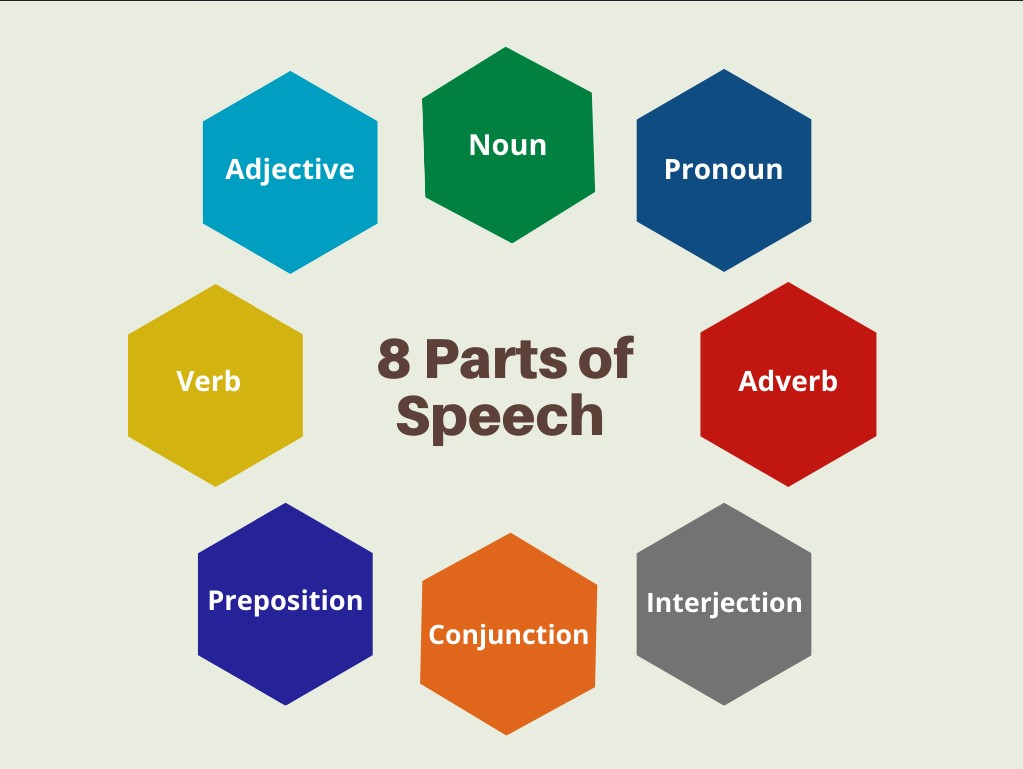
- The 8 parts of speech are nouns, pronouns, verbs, adjectives, adverbs, prepositions, conjunctions, and interjections.
- Each part of speech has a specific job that shapes meaning in a sentence.
- Knowing these categories helps you write clearer, tighter, and more confident English.
- Real examples beat definitions every time when you are trying to remember them.
- A quick daily reading habit locks the rules into your memory faster than drills.
What Are the Parts of Speech?
The parts of speech are the categories that group English words by the job they do in a sentence. Think of them as roles in a play. Nouns name the characters. Verbs move the story forward. Adjectives set the scene.
Every word you use falls into at least one category. Some words even change roles depending on how you use them.
That flexibility is what makes English so tricky. It is also what makes it fun once you understand the system.
The 8 Parts of Speech With Examples
Here is the full lineup, one by one, with quick definitions and examples you can actually picture.
1. Nouns
A noun names a person, place, thing, or idea. It is the “who” or “what” of your sentence.
Examples include teacher, London, coffee, and freedom. You will notice some are concrete and some are abstract.
Nouns can be common (city) or proper (Paris). They can also be singular or plural, and sometimes their spelling shifts when prefixes change meaning in unexpected ways.
Try this quick test. If you can put “the” or “a” in front of the word, it is usually a noun.
2. Pronouns
Pronouns stand in for nouns so you do not have to repeat yourself. They keep your writing smooth instead of clunky.
Common examples are he, she, it, they, we, you, and who. Each type does a slightly different job.
Personal pronouns replace names. Demonstrative pronouns point at things. Relative pronouns link clauses together.
Without pronouns, you would write sentences like “Sarah told Sarah’s brother that Sarah was leaving. “Awkward, right?
3. Verbs
Verbs express action or a state of being. They are the engine of every sentence.
Action verbs include run, build, write, and laugh. Linking verbs like “is,” “seem,” and “become” connect the subject to more information.
Verbs also change with tense, which is where things get interesting. If you have ever debated when to use “was” versus “were”, you already know verb forms can trip up even confident writers.
A quick tip. Every complete sentence needs at least one verb, no exceptions.
4. Adjectives
Adjectives describe or modify nouns. They add color, size, mood, and detail.
Examples include bright, tiny, ancient, stubborn, and calm. Each one paints a slightly different picture.
You will often see adjectives in pairs that feel similar but carry different weight, like words that mean fair versus just. Picking the right one shapes how your reader feels about the noun.
Stack too many adjectives, though, and your sentence gets heavy. One or two strong choices usually beats a pile of weak ones.
5. Adverbs
Adverbs modify verbs, adjectives, or other adverbs. They answer how, when, where, or to what degree.
Examples include quickly, yesterday, there, very, and often. Most, but not all, end in -ly.
Adverbs help you fine-tune meaning. “She spoke” tells you something. “She spoke softly” tells you a lot more.
Watch out for overuse. Strong verbs usually beat weak verbs propped up by adverbs.
6. Prepositions
Prepositions show the relationship between a noun or pronoun and another word in the sentence. They handle direction, time, and place.
Common ones are in, on, at, between, before, after, and through. Prepositions almost always sit before a noun or pronoun.
You will spot them in common polite phrases that dress up everyday requests. That tiny word “at” carries a lot of weight in a business email.
Learning prepositions well is one of the fastest ways to sound natural in English.
7. Conjunctions
Conjunctions join words, phrases, or clauses. They are the glue of your writing.
The most common are the FANBOYS: for, and, nor, but, or, yet, and so. Each one signals a different relationship between ideas.
Subordinating conjunctions like “because,” “although,” “since,” and “if” connect a main idea to a supporting one. They help you build layered, complex sentences.
Use conjunctions to combine short, choppy sentences into smoother-flowing ones.
8. Interjections
Interjections are quick emotional words or phrases. They express surprise, joy, pain, or reaction.
Examples include wow, ouch, hey, oops, and yikes. Most stand alone, followed by a comma or exclamation point.
You will not use interjections much in formal writing. They shine in dialogue, casual posts, and anywhere you want to sound human.
Why Parts of Speech Definitions and Examples Matter for Your Writing
You might wonder if knowing labels really changes your writing. It does, in three big ways.
First, you spot errors faster. When you know a sentence needs a verb, you catch missing ones instantly.
Second, you make sharper choices. You will swap a bland adjective for a punchy one or trade an adverb for a stronger verb.
Third, tools work better for you. Running your draft through a smart grammar checker makes more sense when you can read its suggestions without confusion.
Grammar knowledge turns automated feedback into a real learning moment. Instead of accepting a change blindly, you know why it is an upgrade.
Quick Tips to Master the 8 Parts of Speech
You do not need to memorize a textbook. Small daily habits beat long study sessions.
- Read for ten minutes a day and mentally label the parts of speech as you go.
- Rewrite one weak sentence from your drafts using stronger verbs and fewer adverbs.
- Keep a running note of tricky words that shift roles, like run (verb) and run (noun).
- Test yourself with a short quiz once a week to lock the categories in.
- Explain each part of speech out loud to a friend. Teaching is the fastest way to learn.
Do this for two weeks. You will notice your writing tighten up without even trying.
Final Thoughts
The 8 parts of speech are not fussy grammar rules. They are the framework that keeps every sentence you write standing tall.
Once you understand nouns, pronouns, verbs, adjectives, adverbs, prepositions, conjunctions, and interjections, English stops feeling like guesswork. You start seeing patterns everywhere.
Keep it simple. Read a little every day, notice how writers use each part of speech, and try labeling words in your own drafts.
Small steps compound fast. Before long, the parts of speech will feel less like a lesson and more like second nature.
FAQs
1. What are the 8 parts of speech in English?
The 8 parts of speech are nouns, pronouns, verbs, adjectives, adverbs, prepositions, conjunctions, and interjections. Each one plays a specific role in shaping the meaning of a sentence.
2. Can one word belong to more than one part of speech?
Yes. Many English words shift categories based on how you use them. “Run” is a verb in “I run daily” and a noun in “That was a long run.”
3. What is the easiest way to remember the parts of speech?
Practice beats memorization. Read a short paragraph each day and label a few words as nouns, verbs, or adjectives. After a couple of weeks, the categories will feel natural.