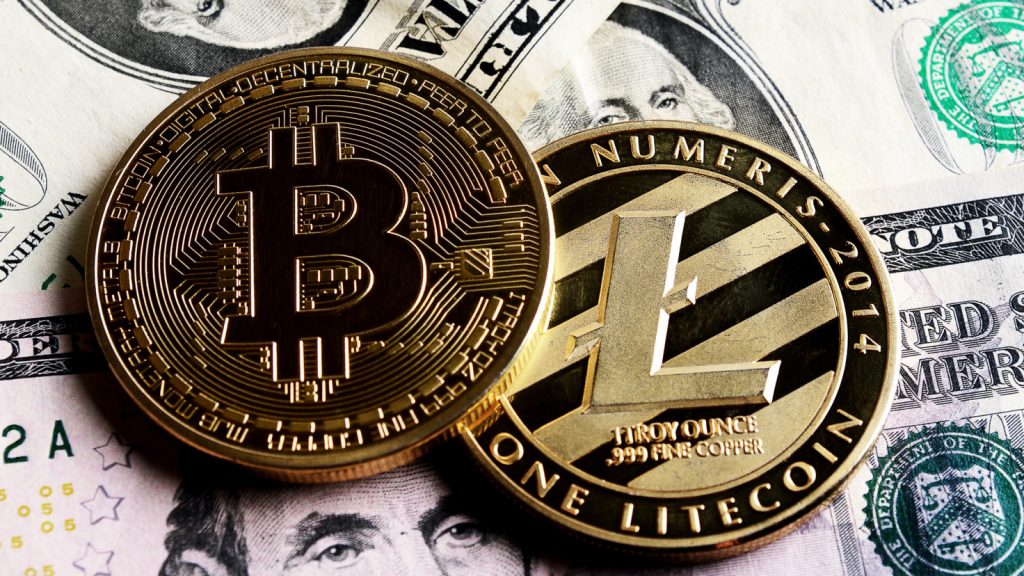
Exchanging Bitcoin (BTC) for Litecoin (LTC) often appears as a simple conversion within the cryptocurrency market, but in reality, it’s a transition between two different approaches to using digital money. Bitcoin is typically viewed as an asset for storing value and long-term solutions, while LTC is more focused on fast transfers and everyday transactions.
Despite their shared technical foundation and similar history, these two cryptocurrencies have taken on different roles. Therefore, exchanging BTC for LTC is rarely associated with a switch in strategy; rather, it’s a reallocation of funds for specific purposes.
Why users are interested in converting BTC to LTC
Bitcoin isn’t always convenient for frequent transactions. During periods of high network load or when quick transfers are needed, users may seek a lighter instrument. In this sense, Litecoin is perceived as a more practical version of cryptocurrency for everyday use.
The reasons for conversion are usually quite simple:
- the need for fast transfers between wallets;
- using Litecoin as a payment asset;
- reducing confirmation times;
- working with services where Litecoin (LTC) is more convenient;
- re-allocating a portion of your portfolio;
- testing or technical operations;
- temporary storage of liquidity.
In such cases, Litecoin serves not as a replacement for Bitcoin, but as a tool for faster transactions.
How Litecoin differs in real-world use
Although BTC and LTC are often compared, their behavior in real-world transactions differs significantly. Bitcoin is more complex in terms of usage and is valued for its network stability and status as a base asset. Litecoin, on the other hand, was created as a lighter and faster version of cryptocurrency. This is reflected in practical use:
- LTC confirms transactions faster;
- The Litecoin network is less congested;
- Fees are typically lower than Bitcoin;
- More convenient for small transfers;
- Suitable for frequent transactions;
- Widely supported by services;
- Used as a “working” cryptocurrency.
Because of this, many users hold LTC alongside BTC, rather than instead of it.
What Affects the BTC to LTC Exchange
Despite the simplicity of the exchange process, the outcome depends on a number of factors. This applies not only to the exchange rate but also to the technical conditions of the transaction. Before converting, the current cryptocurrency exchange rate, network fees, available reserves, the liquidity of the exchange, and the stability of the exchanger are typically taken into account. Even small fluctuations in these parameters can affect the final amount.
Unlike speculative trades, exchanging BTC for LTC is rarely an attempt to profit from the exchange rate. More often, it is a practical decision related to the ease of use of funds. User behavior typically looks like this:
- A portion of the BTC is converted into LTC for transactions;
- There is no active trading during the exchange;
- The focus is on functionality;
- Transactions are carried out quickly and accurately;
- LTC is used as a support asset.
This makes the exchange more of a technical step than an investment strategy.
Advantages of Electronic Exchange Services
Electronic exchange services are popular because they simplify the process to a single transaction. The user doesn’t have to deal with orders, charts, or market interfaces. The process usually boils down to a simple scheme: sending Bitcoin and receiving Litecoin to a wallet. This is very convenient when:
- there is no need to trade;
- speed of the transaction is important;
- a simple transfer between assets is required;
- the user doesn’t want to understand exchanges;
- the transaction is practical in nature.
In this case, the exchanger acts as a tool for direct conversion between two different cryptocurrency systems.