Language shapes how people see you in seconds. One phrase can make you sound confident, awkward, warm, or strangely dramatic. That’s exactly what happens with “I’m at your disposal.” It’s grammatically correct, yet many people hesitate before using it. Something feels… off.
So is “I’m at your disposal” correct or outdated? Polite or submissive? Professional or theatrical? Let’s unpack the meaning, tone, psychology, and modern alternatives so you always choose the right words.
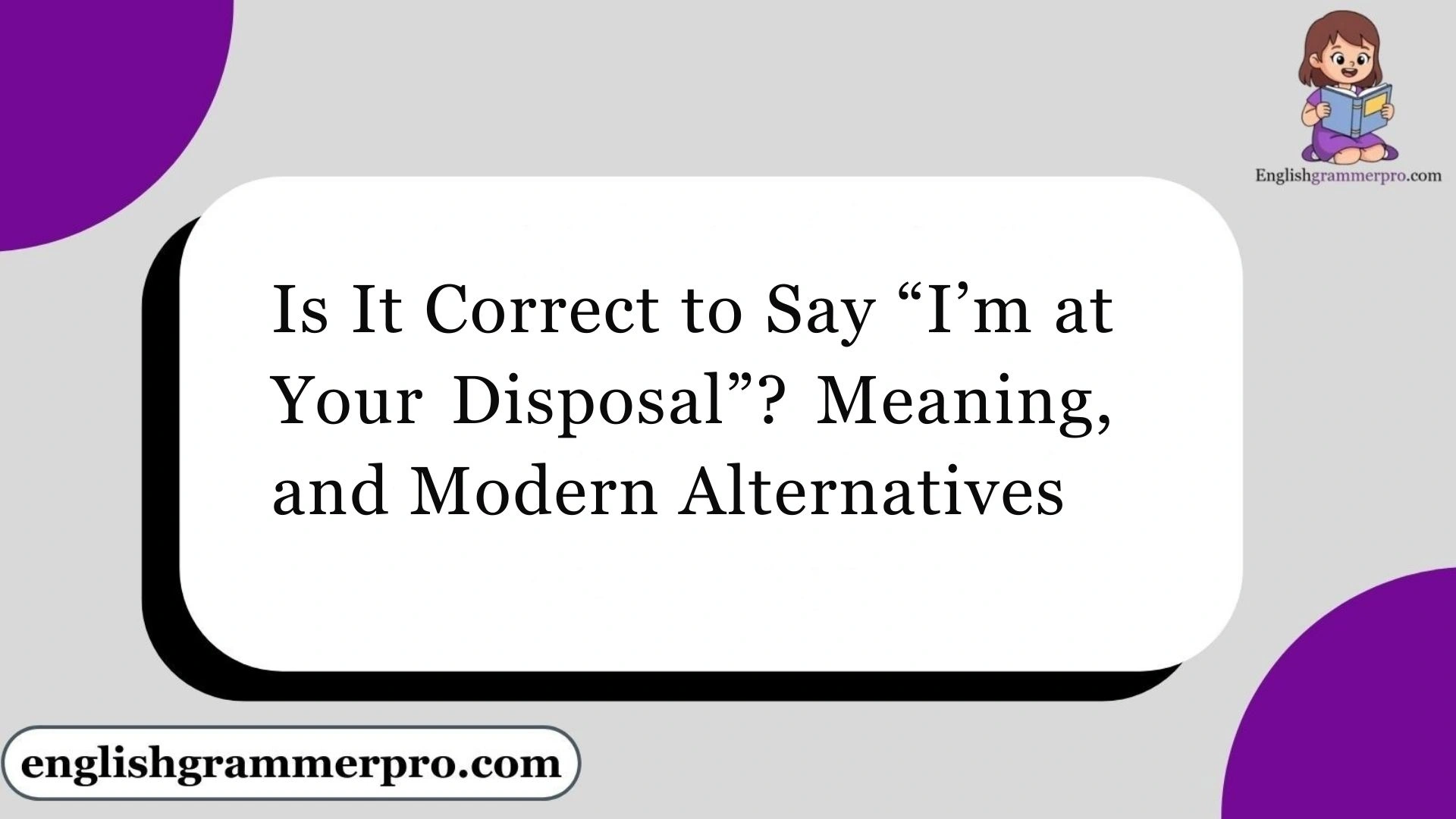
Is It Correct to Say “I’m at Your Disposal”?
Yes, the phrase is grammatically correct. No grammar rule forbids it. Native speakers understand it instantly. Still, correctness does not guarantee suitability. Tone carries more weight than grammar in modern communication.
Today, the phrase often sounds:
- Overly formal
- Old-fashioned
- Hierarchical
- Dramatic
That reaction comes from tone, not syntax.
What Does “I’m at Your Disposal” Actually Mean?
At its core, the phrase means you are fully available to serve someone’s needs. It expresses willingness, readiness, and compliance.
However, the emotional undertone goes further. It implies the listener has authority over your time and effort.
Literal vs Figurative Meaning
| Type | Meaning | Interpretation |
| Literal | Ready to be used | You offer your availability |
| Figurative | Willing to serve | You signal submission of effort |
| Social | Lowered status | Listener appears in control |
Even though you only mean “I’m happy to help,” the phrase suggests a deeper power dynamic.
Is “I’m at Your Disposal” Grammatically Correct?
Grammar lovers can relax. The structure is solid.
Sentence breakdown:
| Part | Role | Explanation |
| I’m | Subject + verb | Contraction of “I am” |
| at | Preposition | Shows position or readiness |
| your | Possessive determiner | Indicates who benefits |
| disposal | Noun | Means “use” or “control” |
It follows a common pattern: subject + linking verb + prepositional phrase. No errors exist. The issue lies in pragmatics, which studies how context affects meaning.
Why “I’m at Your Disposal” Sounds Strange Today
Language evolves with society. Power structures shifted over time. Communication moved toward collaboration rather than hierarchy. This phrase stayed stuck in older social norms.
Main Reasons It Feels Off
- Suggests servitude
- Sounds ceremonial
- Lacks warmth
- Feels scripted
- Rare in everyday speech
When language feels unnatural, listeners focus on the wording instead of the message.
Historical Origin of “At Your Disposal”
This expression traces back to formal European etiquette, especially French-influenced aristocratic speech. Nobles and servants used deferential language to signal status differences.
Older English letters often included phrases like:
“I remain, Sir, your humble and obedient servant.”
Modern society rarely communicates that way. Equality replaced rigid hierarchy in most settings.
Tone Analysis: How the Phrase Makes You Sound
Tone perception matters more than intention.
| Tone Perception | Why People Hear It That Way |
| Submissive | “Disposal” implies being used |
| Formal | Rare in casual language |
| Distant | No emotional warmth |
| Theatrical | Sounds like historical dialogue |
Even friendly intent can land wrong.
When “I’m at Your Disposal” Is Appropriate
The phrase still works in specific contexts where formality and service hierarchy are expected.
Good Situations
- Luxury hotel concierge roles
- Diplomatic or ceremonial speech
- Personal assistant services
- High-end hospitality brands
- Period dramas or theatrical settings
In those environments, elevated language matches expectations.
When You Should Avoid Saying It
Using it casually often feels awkward.
Avoid In
- Friendly emails
- Startup workplaces
- Peer conversations
- Social media
- Text messages
In these spaces, warmth and collaboration beat formal deference.
Psychological Impact of the Phrase
Words signal status subconsciously. People form impressions fast.
Possible Effects
- Reduces perceived authority
- Signals unequal power balance
- Creates emotional distance
- Makes speaker sound rigid
Modern professional communication favors partnership language.
Business Communication Perspective
Workplaces value teamwork over submission. Leaders rarely speak in self-lowering terms.
Compare the impact:
| Phrase | Impression |
| I’m at your disposal | Subordinate tone |
| Let’s work on this together | Collaborative tone |
| I’m happy to help | Supportive tone |
| I’m available if needed | Professional tone |
Language shapes leadership presence.
Modern Alternatives to “I’m at Your Disposal”
You can keep the helpful spirit without sounding outdated.
Natural Replacements
| Instead of Saying | Try This | Tone |
| I’m at your disposal | I’m happy to help | Friendly |
| I’m at your disposal | Let me know how I can help | Professional |
| I’m at your disposal | I’m available if you need anything | Neutral |
| I’m at your disposal | Feel free to reach out | Casual |
| I’m at your disposal | I’m here to support you | Warm |
These phrases sound human and modern.
Formal but Safer Alternatives
Need professionalism without submissiveness? Try these:
- “Please let me know how I may assist.”
- “I remain available for further support.”
- “Do not hesitate to contact me.”
They maintain formality without surrendering authority.
Read More:Silver Lining Meaning: How to Find a Real Silver Lining in Difficult Situations
Examples: Natural vs Awkward Usage
Sounds Natural
- “I’m happy to clarify any details.”
- “Let me know if you need help.”
- “I’m available this afternoon.”
Sounds Awkward
- “Hey, I’m at your disposal.”
- “Team, I’m at your disposal for tasks.”
- “Bro, I’m at your disposal anytime.”
Mismatch between tone and context creates discomfort.
Case Study: Email Tone Comparison
Version A
I’m at your disposal for any further information.
Reader reaction: Formal, distant, impersonal.
Version B
I’m happy to provide more details if helpful.
Reader reaction: Warm, cooperative, modern.
Same intent, different emotional impact.
Cultural Shifts Behind the Change
Language mirrors society’s values.
Past communication style:
- Hierarchical
- Formal
- Ritualistic
Modern communication style:
- Collaborative
- Efficient
- Personal
The phrase belongs more to the first category.
Linguistic Insight: Pragmatics Over Grammar
Grammar asks “Is it correct?” Pragmatics asks “Does it fit?”
“I’m at your disposal” passes grammar but often fails pragmatic appropriateness.
Think of language like clothing. A tuxedo works at a gala. It looks ridiculous at the gym.
Quick Rule to Remember
If the relationship feels equal, avoid the phrase.
If the role involves formal service, it may work.
Common Misconceptions
| Myth | Reality |
| It’s wrong English | It’s grammatically correct |
| It’s always polite | Tone may feel excessive |
| It’s professional everywhere | Only in formal settings |
| It shows respect | Can signal low status |
Final Verdict on “I’m at Your Disposal”
- Grammatically correct
- Tone-sensitive
- Old-fashioned in daily use
- Best replaced in modern contexts
Use it intentionally, not automatically.
FAQs
Is “I’m at your disposal” rude?
No, but it may sound overly formal or submissive.
Does it sound old-fashioned?
Yes, many speakers associate it with older etiquette.
Is it professional in emails?
Only in very formal or service-based roles.
Can managers say this to teams?
Usually not. It lowers leadership tone.
What is the friendliest alternative?
I’m happy to help” works almost everywhere.
Conclusion
Language evolves with people. While “I’m at your disposal” is correct, modern ears prefer warmer, more collaborative phrases. Choosing updated wording improves clarity, professionalism, and human connection.
Communication isn’t just about correctness. It’s about how your words make people feel. Use language that sounds natural, confident, and human. That’s what leaves a lasting impression.

Amelia Walker is a passionate English language writer and grammar enthusiast at EnglishGrammerPro. She specializes in simplifying confusing grammar rules and commonly mixed-up words into clear, practical explanations. With a strong focus on real-life usage and easy examples, Amelia helps learners build confidence in writing and everyday communication. Her goal is simple: make English easy, clear, and approachable for everyone.